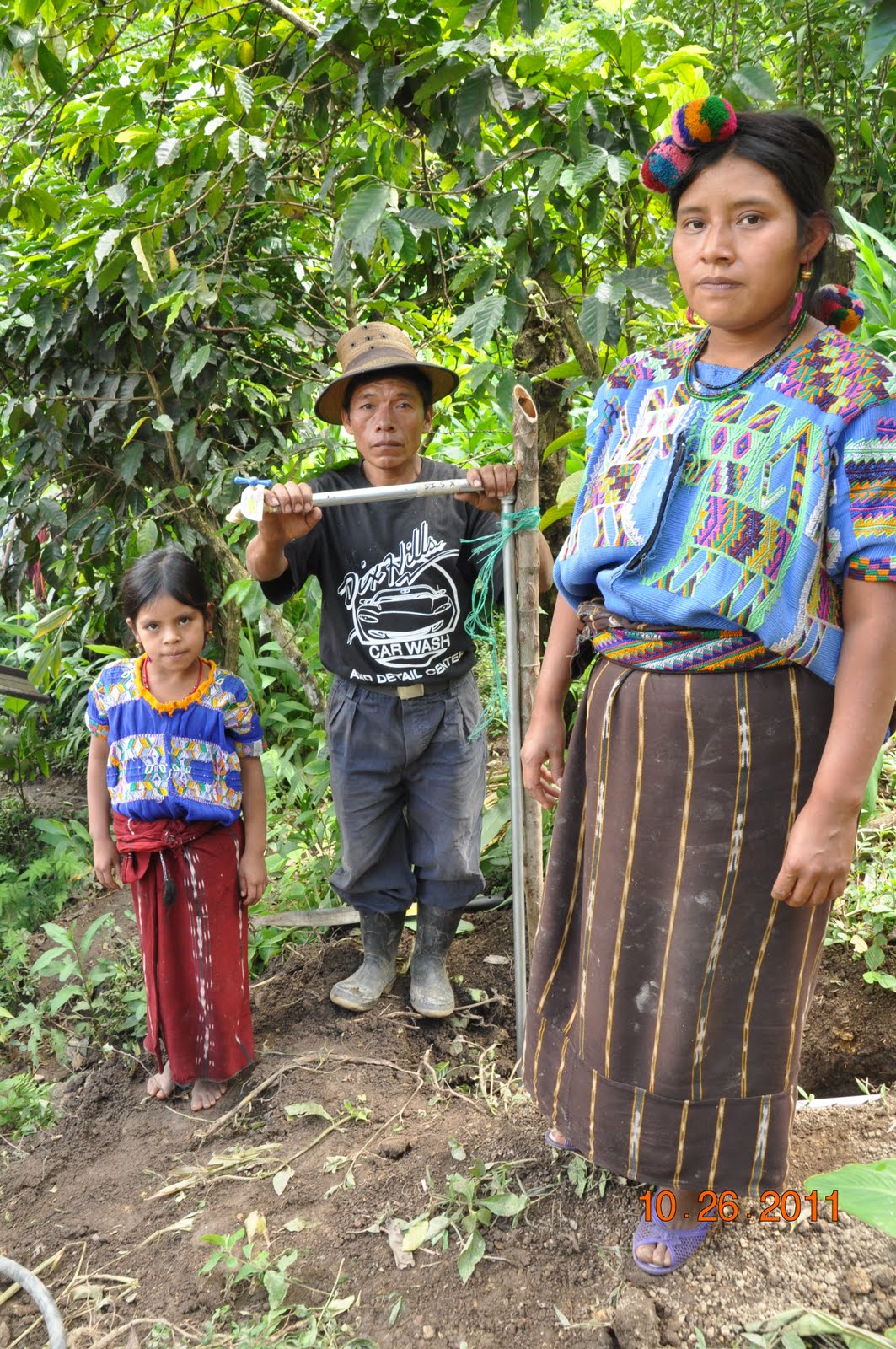
This blog is the second half of our entry made in July 2010. This November we have celebrated the completion of two village water systems. This one chronicled here and another in the village of Nueve Puntos. It is a great accomplishment that will better the lives of around 1,000 people for many years to come. Enjoy the photos of the work accomplished and lives changed. The photo above is of the collection tank built at the mountain spring 8,000 feet behind and 400 feet higher than the village.

Our blog chronicles part of the work done to bring this source of clean water down and across the mountain to villagers like this girl. The work, distances and cost have been great but what a reward to see clean water at in front of each home.

Remember over 1,500 100 pound sacks of sand cement and gravel were carried up the hill to build the two tanks

And that over 30,000 feet of piping and ditch were hand dug and laid.

In October Michael visited the two water projects to help bring them to completion and one of the first jobs in Las Flores was to suspend metal piping to cross the small stream of Xesalli. Picture here is our go to assistant Andres at the foot bridge.

Two concrete towers were constructed to suspend cable and 3” galvanized pipe above the water way. Here they are pictured before the forms were removed

A villager is placing the cable on top of one of the towers.

While the work group was stringing the cable and piping Michael lead a group back up to the spring to make some final connections and open the gate valves to clean and test the piping between the spring and crossing. The system has 5 concrete lids like this one which in hind sight could be have been made a little lighter.

After the enormous amount of work done this was the first time the water would travel down the hill. It was exciting for everyone to see the force of the clean water running out of the piping.

We had rain most days during this month. This man makes use of one of the natural umbrellas that are in the jungle around us.

Here we are passing the piping across the stream.

Michael is basically cheap. This quality has good points but at times presents it own challenges. He did not want to spend $120 for two pipe clamps big enough to tighten 3 inch pipe and felt they could make due lashing poles to the pipe. This did not work at all. A large “C” clamp helped but still did not finish the job.

Our solution turned out to be a human pipe clamp! Centered in this photo is Manuel Ramirez our program director.

A project like this is impossible without many hands. Here we are lifting the connected pipes.

And placing them through each tower.

Pictured above is Domingo our mason. He spent 50 days managing the concrete work often from 6 in the morning to 6 at night. The total cost for his labor was a little over $500. Here one of his community volunteer days he is connecting the cable and pipe with rebar hangers.

Manuel Lopez surveys the water flow on the other side of the crossing. He has donated over 70 days on this project and without his help it would not have happen. It takes strong dedicated leaders to be partners with us. In total this crossing is 120 feet long.

Our July blog described the beginning of the building of this storage tank positioned half way between the village and spring. It is the biggest tank we have seen in this region. Both the village and TRE are extremely proud of the craftsmanship and design of this system. It will serve the community well for many years.

Michael the mayor and mason inside the tank before our final cleaning. When the water entered the tank it sounded like a jet taking off. We tried to measure the flow and it filled a five gallon bucket in about one and a half seconds!

After the tank was filled we resumed the work of digging trenches and laying pipe.

This time however was different because we were entering the village. The mood often was festive and the goal near.

After travelling 6,000 feet this father digs the final few feet to connect his home to the spring.

This man was forced to patrol for the army during the war when his arm was shattered by a bullet. Now with 13 dependents in his home how will he ever escape poverty?
 Michael connecting a faucet, which was one of the very fulfilling parts of his time there. He was touched as he visited the homes, was offered gifts of bananas and free lunches. The effort to see these projects happen seems small in comparison to the level of poverty he saw as he travelled the muddy hillsides.

We purchased and installed 154 new faucets and repaired 30 existing ones.

Water faucets for families not for just numbers in a program.


Michael describes this photo”Here I am passing a letter of completion to the water committee. TRE has spent over $15,000 on this project and the local government has provided the same amount in piping and I ask the question what have we done? The amount of money, the distance of piping and sheer weight of all the loads carried seems impossible. But here we are after many small steps we have made a long jouney. When the water entered the village’s main line and I walk through to the far side of the community everywhere I saw faucets spewing for clean water with great pressure. Fathers, mothers and children all signaling that they had water, smiling, waving and shouting I released we did it, we did it! Las Flores has clean drinking water! Water to families like the one below. We have embraced the poor, shared of our wealth, loved our neighbor. It felt like winning, it felt right.

After one year of work the goal is here. Water to 200 homes like this one.


 Starting down the trail toward Nueve Puntos
 They sheep did not like the muddy trail
 Offering them a lift through the mud hole
 Break time


 When this lamb showed signs of being tired he was quickly offered a ride

 Arrivng in the village

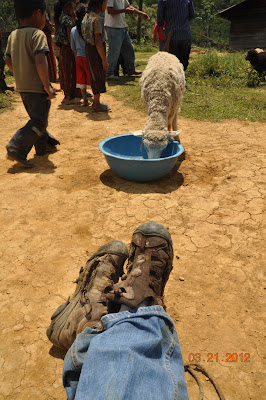 A view of my boots. These old boots have traveled over a lot of trails.
 Once everyone and the sheep were rested we tied numbers to each of the lambs so we could distribute them by lottery
 A corresponding number was written on a separate piece of paper and put into my hat.
 Pedro selecting his number.
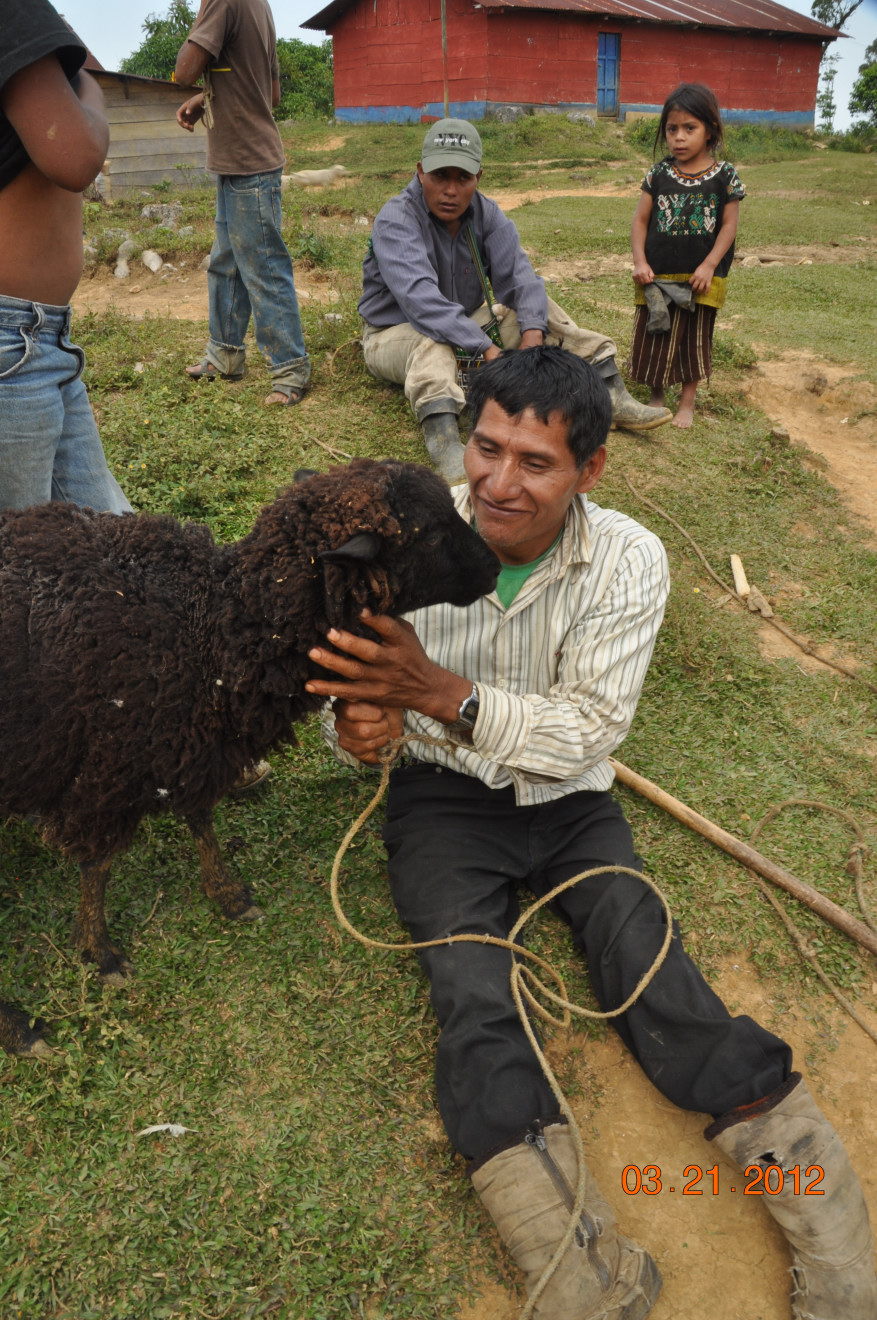 Chico making friend with the black lamb.

 A happy new owner.

 Securing his animal with a home made rope made from vines from the forrest
 A heart felt thank-you


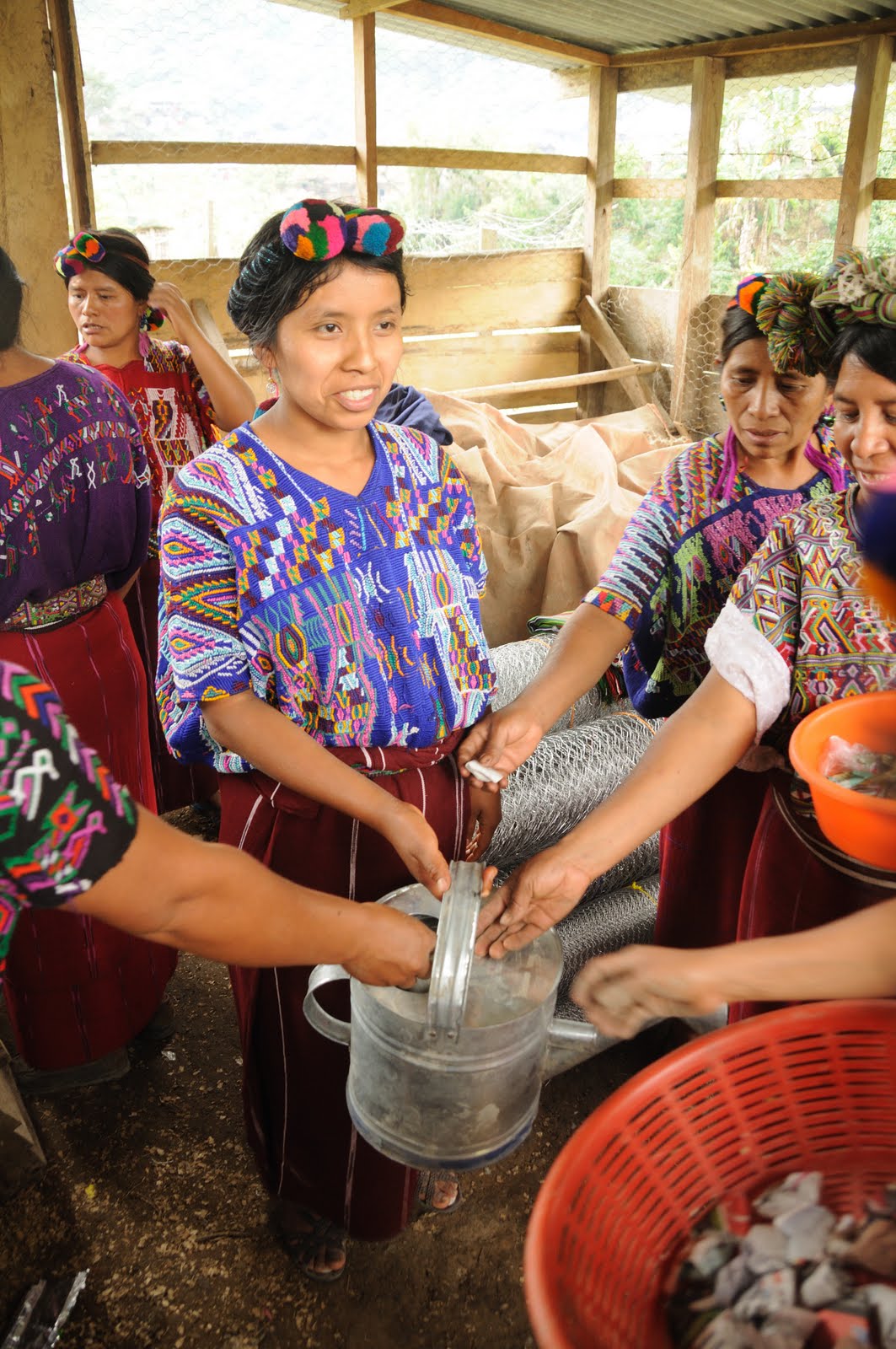


 Michael connecting a faucet, which was one of the very fulfilling parts of his time there. He was touched as he visited the homes, was offered gifts of bananas and free lunches. The effort to see these projects happen seems small in comparison to the level of poverty he saw as he travelled the muddy hillsides.